 Image 1 of 2
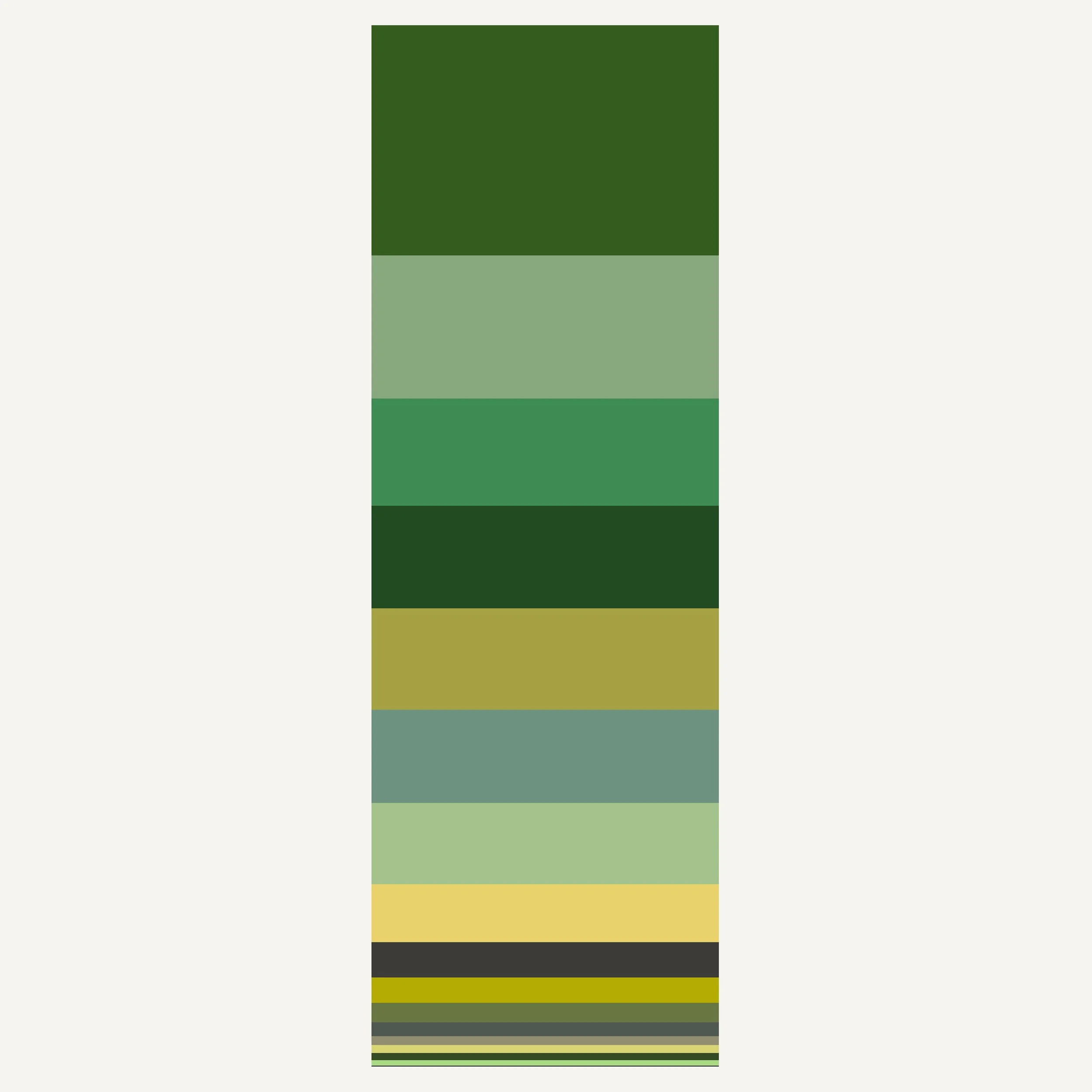 Image 2 of 2
Unlimited edition. 18 x 24 inch, museum-quality poster on matte paper.
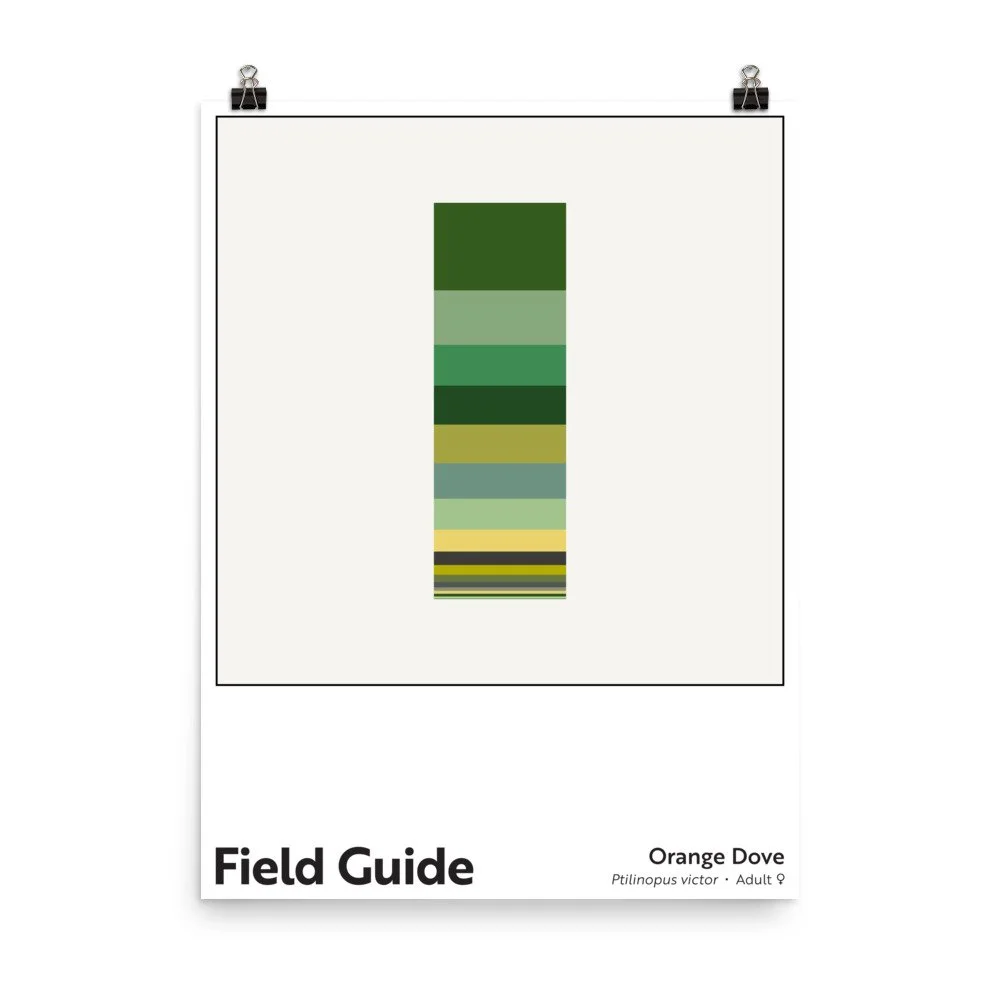
When I released the color column for the male orange dove, I described the species as aptly-named and incredibly flamboyant. That’s only true for the male. Unlike her orange and tangerine counterpart, the female orange dove isn’t orange at all! Were the species named for her, green dove would be more appropriate. But what a lovely green she is, a panoply of hunter and fern greens with viridian, washed out emerald, mint, pistachio, olives, and green gold.
The orange dove is a member of the Columbidae family. That makes it a relative of the very familiar rock pigeon (or rock dove) that so many of us know from city living around the world. The orange dove, though, has a much smaller range; it is endemic to the woodlands of the Fijian archipelago. Despite its geographic isolation, it is a common species in Fiji and it not considered to be an at-risk species.
These dove generally live alone or in pairs, but small flocks do occur. Whether together or solo, the orange dove forages in the forest canopy and understory, primarily seeking fruits and berries. They have been observed eating caterpillars and other insects on occasion – females more often than males, however. Researchers believe the breeding season of the orange dove may be much longer than most bird species, as they’ve been documented nesting from June-December. The female does all the work in the process. She builds the simple stick-platform nest, incubates the one or two eggs she lays, and feeds and tends to the chick(s) all on her own. The male just goes on looking fabulous and feeding on fruit and berries. That said, this species has not been studied extensively, and more observation and research is needed. Consider these notes a summary of what little we currently know of the orange dove.
Note: These archival poster prints feature rich, appealing colors. I encourage customers to take care in handling them until they are framed/protected for display; the darker colors on the matte paper can be scratched. They ship rolled, so customers need to flatten them before framing (or have their framer do so).
Charitable Sales Model: Whenever one of these poster prints is purchased, a charitable contribution equal to 10% of the print’s cost (or $3.60) is made to a nonprofit working to tackle environmental or social challenges. Read more about my charitable sales model here.
Unlimited edition. 18 x 24 inch, museum-quality poster on matte paper.
When I released the color column for the male orange dove, I described the species as aptly-named and incredibly flamboyant. That’s only true for the male. Unlike her orange and tangerine counterpart, the female orange dove isn’t orange at all! Were the species named for her, green dove would be more appropriate. But what a lovely green she is, a panoply of hunter and fern greens with viridian, washed out emerald, mint, pistachio, olives, and green gold.
The orange dove is a member of the Columbidae family. That makes it a relative of the very familiar rock pigeon (or rock dove) that so many of us know from city living around the world. The orange dove, though, has a much smaller range; it is endemic to the woodlands of the Fijian archipelago. Despite its geographic isolation, it is a common species in Fiji and it not considered to be an at-risk species.
These dove generally live alone or in pairs, but small flocks do occur. Whether together or solo, the orange dove forages in the forest canopy and understory, primarily seeking fruits and berries. They have been observed eating caterpillars and other insects on occasion – females more often than males, however. Researchers believe the breeding season of the orange dove may be much longer than most bird species, as they’ve been documented nesting from June-December. The female does all the work in the process. She builds the simple stick-platform nest, incubates the one or two eggs she lays, and feeds and tends to the chick(s) all on her own. The male just goes on looking fabulous and feeding on fruit and berries. That said, this species has not been studied extensively, and more observation and research is needed. Consider these notes a summary of what little we currently know of the orange dove.
Note: These archival poster prints feature rich, appealing colors. I encourage customers to take care in handling them until they are framed/protected for display; the darker colors on the matte paper can be scratched. They ship rolled, so customers need to flatten them before framing (or have their framer do so).
Charitable Sales Model: Whenever one of these poster prints is purchased, a charitable contribution equal to 10% of the print’s cost (or $3.60) is made to a nonprofit working to tackle environmental or social challenges. Read more about my charitable sales model here.